About Taxi Driver
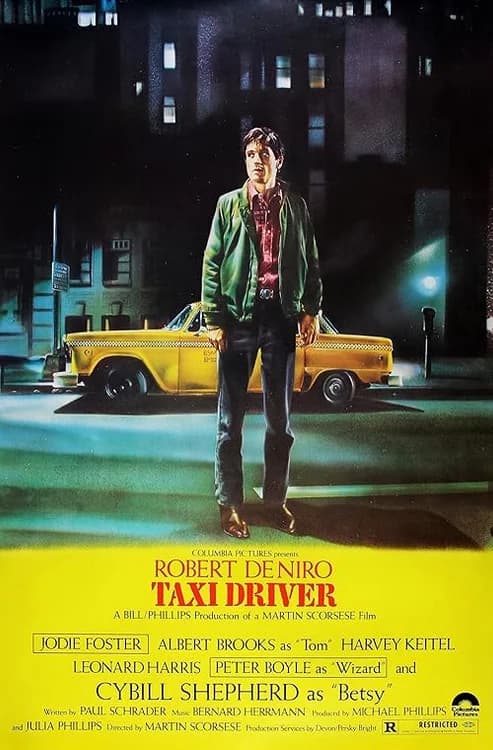
Martin Scorsese's 1976 neo-noir masterpiece 'Taxi Driver' remains one of the most powerful and unsettling portraits of urban alienation and psychological decay ever committed to film. The story follows Travis Bickle, a lonely, insomniac Vietnam veteran who takes a job driving a taxi through the nocturnal streets of a morally bankrupt New York City. As he navigates what he perceives as a cesspool of filth and corruption, his simmering rage and desire for purpose coalesce into a violent obsession with 'cleansing' the city.
Robert De Niro delivers a career-defining performance as Bickle, embodying the character's twitchy isolation and dangerous idealism with terrifying authenticity. His famous 'You talkin' to me?' monologue is just one moment in a meticulously crafted descent. The supporting cast, including a young Jodie Foster as a child prostitute and Cybill Shepherd as a political campaign worker, perfectly accentuates the film's themes of innocence and corruption. Scorsese's direction is taut and immersive, with Bernard Herrmann's haunting, jazz-inflected score and the grimy, rain-slicked cinematography creating an atmosphere of palpable dread.
Viewers should watch 'Taxi Driver' not only for its historical significance as a landmark of 1970s American cinema but for its enduring, provocative exploration of loneliness, masculinity, and violence. It is a challenging, brilliantly acted character study that holds a dark mirror up to society, asking uncomfortable questions that remain profoundly relevant. Its influence on filmmaking and popular culture is immeasurable, securing its place as an essential watch for any serious film enthusiast.
Robert De Niro delivers a career-defining performance as Bickle, embodying the character's twitchy isolation and dangerous idealism with terrifying authenticity. His famous 'You talkin' to me?' monologue is just one moment in a meticulously crafted descent. The supporting cast, including a young Jodie Foster as a child prostitute and Cybill Shepherd as a political campaign worker, perfectly accentuates the film's themes of innocence and corruption. Scorsese's direction is taut and immersive, with Bernard Herrmann's haunting, jazz-inflected score and the grimy, rain-slicked cinematography creating an atmosphere of palpable dread.
Viewers should watch 'Taxi Driver' not only for its historical significance as a landmark of 1970s American cinema but for its enduring, provocative exploration of loneliness, masculinity, and violence. It is a challenging, brilliantly acted character study that holds a dark mirror up to society, asking uncomfortable questions that remain profoundly relevant. Its influence on filmmaking and popular culture is immeasurable, securing its place as an essential watch for any serious film enthusiast.